Key takeaways
- The lot is not ready just because the building is gone.
- Fill must be clean and compacted in lifts.
- Grading should send water away from neighbors and the future building.
- Bare soil needs cover until the next phase.
Cleanup and fill
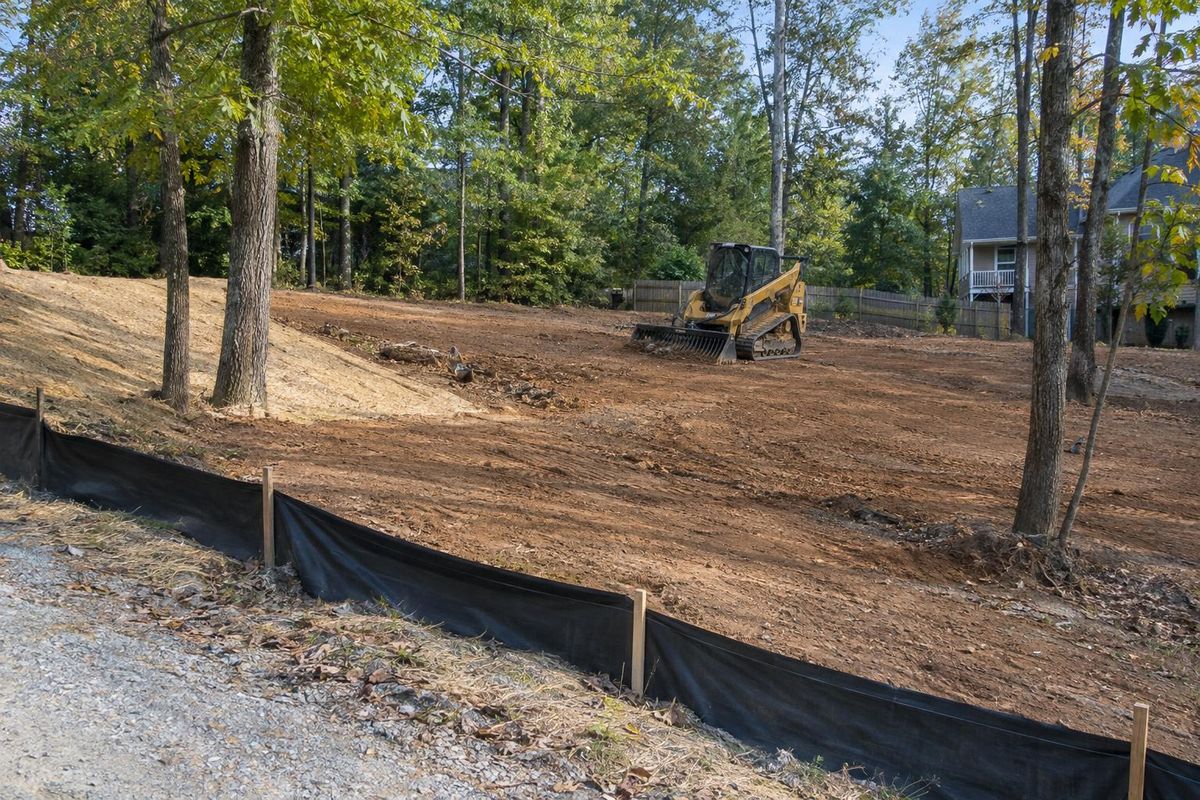
Loose debris, nails and glass are picked up. Basement holes, pool holes and trenches are filled with clean material, compacted in lifts. If a building will go on the filled area, the compaction should be tested and documented.
Tell your contractor early if you plan to build on the filled area.
Grading and drainage
The lot is graded so water runs away from the building site and neighbors. Swales or ditches may be added. Driveways and access points are kept clear.
A smooth, clean lot also looks better to buyers and neighbors.
Cover and protect
Straw, seed, silt fence and inlet protection keep soil on the site. Many cities require erosion control on cleared lots. Keep the cover in place until the next phase of construction begins.
The sources below offer helpful background. Brand names and organizations belong to their owners, and we are not affiliated with them.
Official sites to explore
Brand names and logos belong to their owners. These links open the official websites in a new tab, and we are not affiliated with them.
Quick answers
Do I need to test the fill?
If you will build on it, often yes. We coordinate with your engineer.
Should I seed the lot?
If it will sit bare for a while, yes, or use straw and silt fence.
Who is responsible for erosion control?
The owner and contractor, under local rules. We help set it up.