Key takeaways
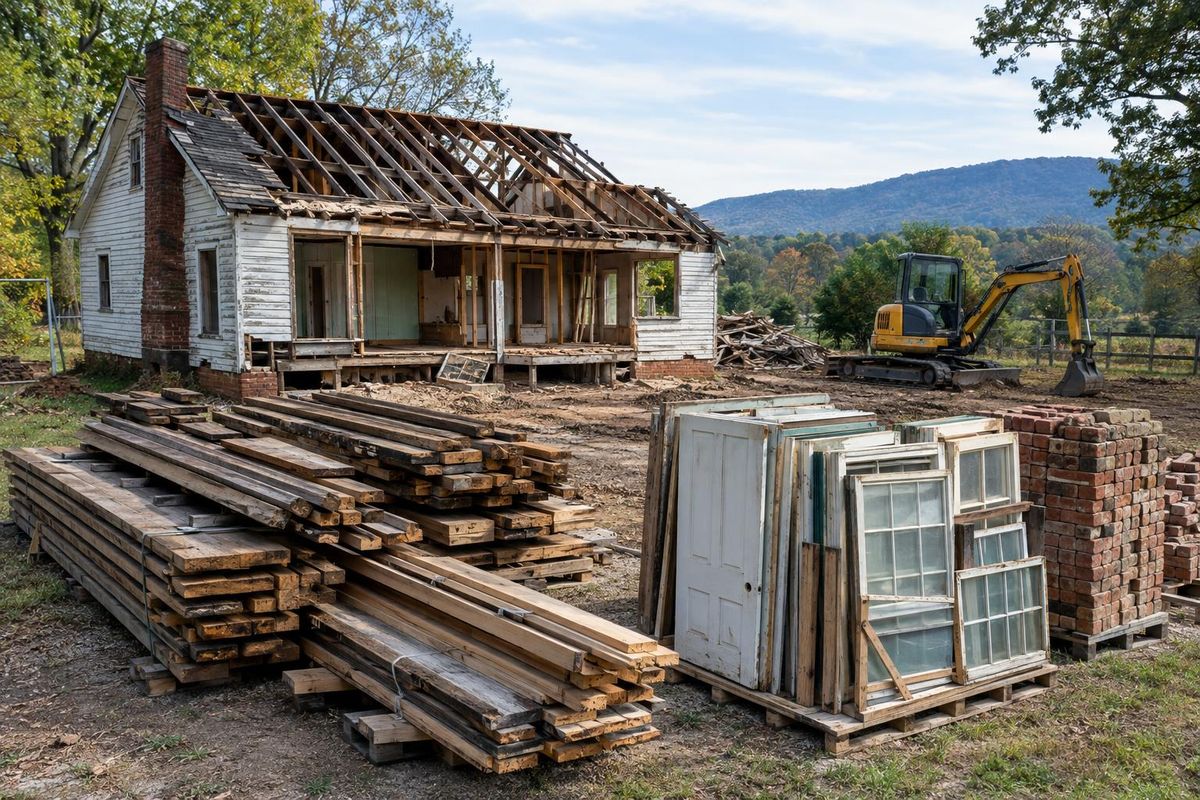
- Deconstruction takes more time but saves valuable material.
- Old-growth lumber, brick, slate and architectural pieces have the highest value.
- Sorting at the site makes recycling possible.
- Recycling can reduce disposal volume substantially.
When to deconstruct
Buildings with old-growth lumber, handmade brick, slate roofs, heart pine floors, stone, mantels and unusual hardware are worth taking apart by hand. The work takes longer than machine demolition, so it fits projects where the material is valuable or the owner wants to reuse it.
A salvage survey tells you what can be saved.
What recycling covers
Concrete and brick can be crushed into stone. Steel, copper and aluminum go to scrap dealers. Clean lumber can be reused, chipped or processed. Drywall, shingles and mixed debris have their own streams at some facilities. Sorting at the source keeps streams clean.
Not everything can be recycled, but most demolition material can.
Where to learn more
Industry and government groups publish recycling information. Brand names and organizations belong to their owners, and we are not affiliated with them.
Official sites to explore
Brand names and logos belong to their owners. These links open the official websites in a new tab, and we are not affiliated with them.
Quick answers
Can I donate salvaged materials?
Often yes, and some donations may qualify for a deduction. Ask your tax professional.
Is deconstruction more expensive?
It takes more labor, but material value can offset part of it. We explain the tradeoffs.
What cannot be recycled?
Contaminated and hazardous materials need special disposal.